Hydrological & Water Quality Modeling
I develop, evaluate, and apply SWAT, SWAT+, and AnnAGNPS to study streamflow, sediment, and nutrient transport. This includes model calibration, validation, and watershed-scale applications.
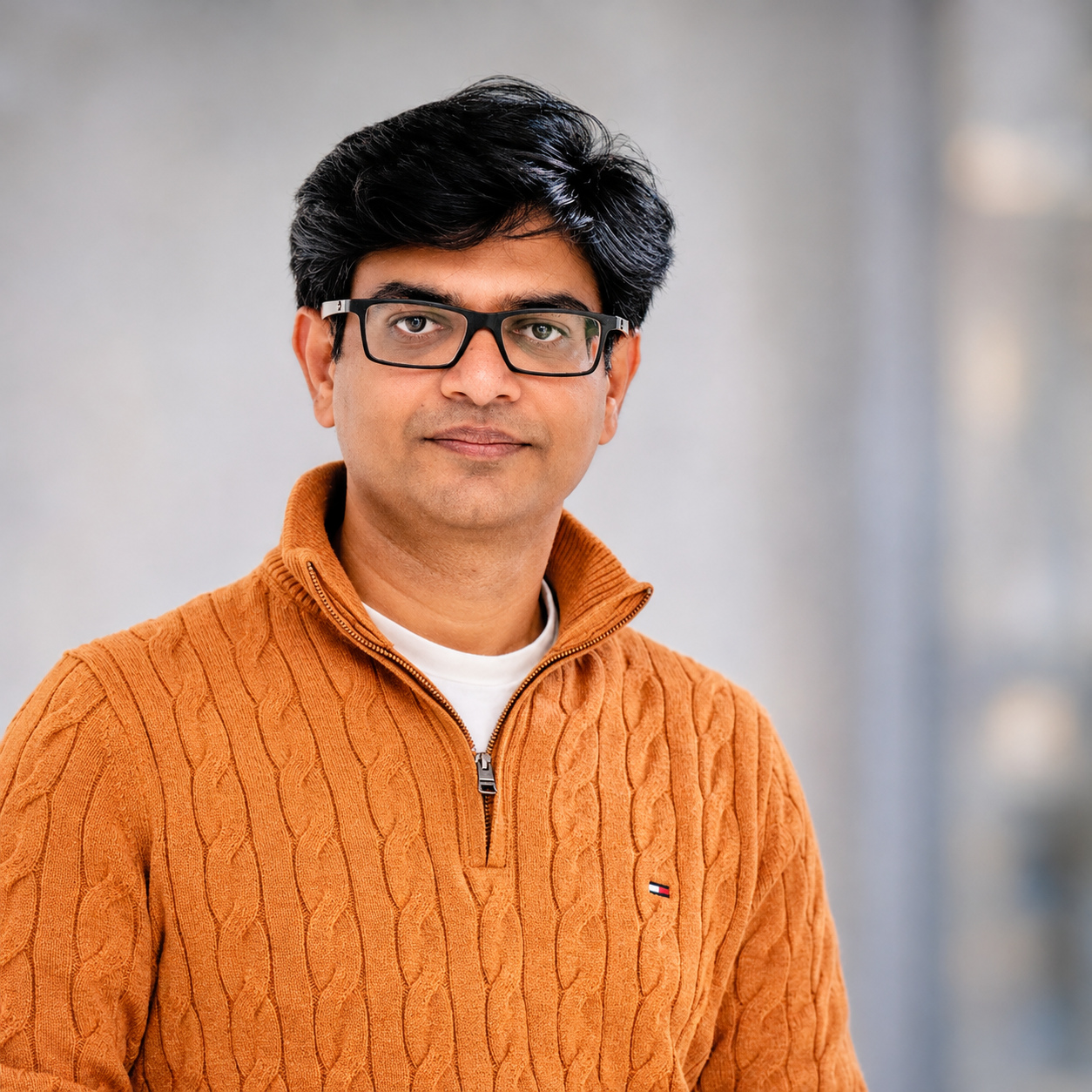
I am an Associate Professor in the School of Engineering at the University of Guelph. My academic work includes research, teaching, and professional service.
My research focuses on water quantity and quality issues using hydrological modeling, GIS, remote sensing, machine learning, and field investigations. I work on problems ranging from field-scale processes to watershed-scale management.
I teach undergraduate and graduate engineering courses and supervise students working in water resources and environmental engineering. I also contribute to university governance, professional engineering organizations, and scientific activities through leadership and service roles.
University of Guelph
2021 – Present
University of Guelph
2016 – 2021
Texas A&M University
2012 – 2016
Kansas State University
2012
Kansas State University
2008
Acharya N. G. Ranga Agricultural University
2004
SWAT Conference, Colorado
Presented in Fort Collins for outstanding contributions to SWAT model development and global applications.
ASABE Central
For driving the name change of CSABE and spearheading the 2025 annual meeting collaboration in Toronto.
Canadian Journal of Soil Science
Recognized for excellence in the multidimensional soil data harmonization study (OSIS).
CSBE / SCGAB
Awarded for outstanding work in soil and water research, teaching, and professional extension.
ASCE Journal of Hydrologic Engineering
Honored for the "Great Lakes Runoff Intercomparison Project Phase 3: Lake Erie (GRIP-E)" study.
NABEC Distinction
Recognized for outstanding accomplishments in research and overall advancement of the profession.
CSBE / SCGAB
National recognition for significant early-career contributions to biological engineering in Canada.
ASABE Journal Recognition
Recognized for exceeding best practices in scholarly peer-review management.
EP621 Guidelines Chair
Led the development of international standards for calibration and validation of hydrologic models.
Texas Section ASABE
State-level recognition for engineering excellence in Lubbock, Texas.
International SWAT Conference, Italy
Presented for unique hydrological model application in the historic Tigris Basin.
National Water Quality Conference
Top 3 Student Posters for research on monitoring and estimating ephemeral gully erosion.
Kansas State University
Recipient of competitive annual travel grants to attend and present at professional engineering events.
Scroll within this list to view more
Mentorship
My research group includes graduate students, postdoctoral researchers, and research associates working on water resources and environmental engineering. This section also lists former students and researchers, including those I have advised, co-advised, or served as a committee member for.
Researchers and students under my primary or co-supervision.
Post-doctorate
Post-doctorate
PhD Student
PhD Student
PhD Student
PhD Student
Master's Student (Thesis)
PhD Student
Undergraduate Researcher
Undergraduate Researcher
Undergraduate Researcher
Postdoctoral Researcher
Research Associate
PhD Student
Scroll within this list to view more
Former researchers and students under my primary or co-supervision.
Master's (Thesis)
Research Associate
Undergraduate Researcher
Undergraduate Researcher
Postdoctoral Researcher
Postdoctoral Researcher
Postdoctoral Researcher
Postdoctoral Researcher
Postdoctoral Researcher
Postdoctoral Researcher
Postdoctoral Researcher
PhD
PhD
PhD
PhD
Master's (Thesis)
Master's (Thesis)
Master's (Thesis)
Master's (Thesis)
Master's (Thesis)
Master's (Thesis)
Master's (Thesis)
Master's (Thesis)
Master's (Thesis)
Master's (Thesis)
Master's (Thesis)
Master's (Thesis)
Master's (Thesis)
Master's (Thesis)
Master's (Thesis)
Master's non-Thesis
Master's non-Thesis
Master's non-Thesis
Master's non-Thesis
Master's non-Thesis
Master's non-Thesis
Master's non-Thesis
Master's non-Thesis
Master's non-Thesis
Master's non-Thesis
Master's non-Thesis
Master's non-Thesis
Master's non-Thesis
Master's non-Thesis
Research Associate
Research Associate
Research Associate
Undergraduate Researcher
Undergraduate Researcher
Undergraduate Researcher
Scroll within this list to view more
Students for whom I serve or have served as a committee member, listed separately from direct supervision.
PhD Student
PhD Student
PhD Student
PhD
PhD
PhD
Master's (Thesis)
Master's (Thesis)
Master's (Thesis)
Master's (Thesis)
Master's non-Thesis
Scroll within this list to view more
My research focuses on hydrology, water quality, soil erosion, and watershed management. I use process-based models, field observations, GIS, remote sensing, and data-driven methods to investigate water and land management.
I develop, evaluate, and apply SWAT, SWAT+, and AnnAGNPS to study streamflow, sediment, and nutrient transport. This includes model calibration, validation, and watershed-scale applications.
I investigate sheet and rill erosion, ephemeral gullies, and sediment movement using field measurements, UAV imagery, terrain analysis, and watershed models.
I study phosphorus, nitrogen, and sediment losses from agricultural landscapes, including tile drainage, critical source areas, and nutrient-management practices.
I assess structural and non-structural best management practices and their effects on water quality, soil health, and greenhouse gas emissions from field to watershed scale.
I use GIS, satellite and UAV imagery, and terrain and soil datasets for watershed characterization, environmental mapping, and hydrological modeling.
I apply machine learning and process-based modeling to water quality prediction, erosion susceptibility, flood forecasting, climate impacts, and decision support.
Selected funded research projects, including funding sources, dates, and my role.
Assessing the effects of agricultural BMPs on soil health, greenhouse gas emissions, and water quality across field and watershed scales.
Principal Applicant
Developing a holistic modeling approach to quantify the soil health and water quality benefits of agricultural BMPs.
Principal Applicant
Applying artificial intelligence techniques and remote sensing to water quality prediction.
Principal Applicant
Modeling phosphorus losses from the Canadian side of the Lake Erie Basin and assessing management and climate-change scenarios.
Principal Investigator
Quantifying ephemeral gully erosion using machine learning and hydrological and water quality models.
Principal Investigator
Modeling the Red River and Assiniboine River basins for water-resources research and assessment.
Principal Investigator
Research services, collaborative systems, and digital projects associated with my work.
Developed to provide regional climate data for hydrological modeling, including SWAT, HEC-HMS, and general CSV download formats.
Web-based visualization of SWAT outputs with GIS-based cloud storage and comparison of watershed-management scenarios.
Research involving soil-data harmonization and digital soil mapping to develop and improve Ontario soil information.
Interactive mapping and analysis of natural hazards using satellite observations and environmental datasets.
Exploration of publications, citation trends, research themes, co-authorship, and geographic connections.
Search by title, journal, or year. Publications are listed newest first.
Retrieving OpenAlex publication records…
Publication data: OpenAlex (profile attribution requires verification). Some records may need metadata review. View the Google Scholar profile for a separate publication and citation record.
Scholarly Metrics
Citation metrics, publication activity, research themes, and global collaborations.
| Metric | Google Scholar | OpenAlex |
|---|---|---|
| Citations | 8,580 | 6,982 |
| h-index | 37 | 36 |
| i10-index | 88 | 76 |
Snapshot: Nov 9, 2026. Google Scholar figures supplied by the researcher; OpenAlex from Research Atlas. Sources differ in coverage and counting. These headline metrics are not live.
Interactive annual and three-year publication counts.
Select a bar for its publication count. Recent OpenAlex indexing may be incomplete.
Classifications based on explicit words and phrases in indexed publication titles.
Select any theme or evolution cell to inspect matching titles. This conservative title-only matching cannot identify every relevant paper and should not be interpreted as a validated subject classification.
Co-authors linked by shared publications indexed in OpenAlex.
Select a co-author node to inspect shared publications.
Country affiliations from the dated Research Atlas report.
Points show the affiliation countries recorded for indexed co-authored papers or a selected sample of citing papers. A paper may count toward more than one country; these are not locations where research was read or used.
Instructional focus on core engineering fundamentals, advanced hydrological modeling, and sustainable conservation design.
Statics and dynamics in engineering design.
Financial analysis and project evaluation.
Vector and raster analysis and applications.
Analysis of the different components of the hydrological cycle and basic hydraulics.
Design for drainage, erosion control and irrigation across different landscapes.
Remote sensing basics, spectral indices, Google Earth Engine, UAVs, and vector and raster analysis and applications in engineering.
Advanced watershed processes including sediment, nutrient transport and best management practices (BMPs).
Study of process-based mathematical models in water resource engineering.